

How brands are testing smarter and releasing faster
The problem with traditional quality control
Many cosmetic brands still rely on traditional cosmetic quality control testing approaches where every batch is tested the same way, regardless of risk or variability.
- Every batch is tested the same way
- Full panels are run regardless of risk
- Decisions are slow and expensive
This approach often leads to unnecessary testing, higher costs, and limited additional insight.
A better approach to quality control
Quality control is evolving.
Instead of testing everything, leading brands are moving toward a more strategic model that focuses on:
- Screening first
- Testing when needed
- Validating when required
This shift allows for faster decisions while maintaining confidence in product quality.
What quality control should actually answer
An effective quality control program should help answer a few key questions:
- Is this batch consistent with the approved formula
- Has anything changed during manufacturing or storage
- Does this batch require additional testing
- Can this batch be released with confidence
If these questions are answered efficiently, both time and cost can be reduced.
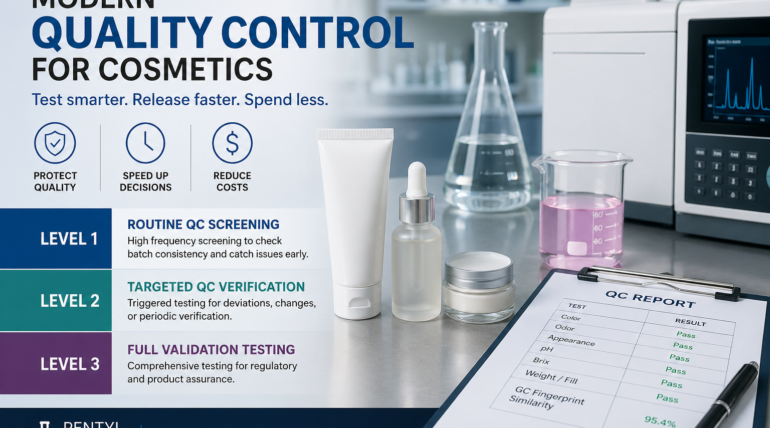
The three level quality control model
A structured, layered approach allows brands to balance speed, cost, and risk.
Level 1 Routine QC Screening
High frequency and designed for every batch
This is the first step in a modern quality control program.
Typical evaluations include:
- Color
- Odor
- Appearance
- pH
- Brix when applicable
- Weight or fill check
- Analytical screening for batch comparison
The goal is to quickly determine whether a batch aligns with the approved standard.
Outputs are simple and actionable:
Pass, Investigate, or Fail
This level acts as an early warning system and helps prevent unnecessary downstream testing.
Level 2 Targeted QC Verification
Performed only when needed
Additional testing is triggered when:
- A deviation is identified during screening
- A formula or raw material changes
- Periodic verification is required
Testing at this level may include:
- Preservative assay
- Microbial testing
- Targeted analytical testing for specific compounds
This ensures that critical quality attributes are confirmed without over testing every batch.
Level 3 Full Validation Testing
Used for regulatory and product assurance
Comprehensive testing is typically reserved for:
- New product launches
- Reformulations
- Retail or regulatory requirements
This level may include:
- Stability studies
- Challenge testing
- Extended analytical panels
The purpose is to validate product safety, stability, and overall performance.
Why this approach works
A layered quality control strategy provides several advantages:
- Faster batch release decisions
- Reduced unnecessary testing
- Lower overall costs
- Earlier detection of formulation changes
- More efficient use of testing budgets
Instead of treating every batch the same, testing is aligned with actual risk and need.
Final takeaway
Quality control is shifting from a one size fits all approach to a more intelligent, data driven model.
Screening allows for fast decisions.
Targeted testing confirms what matters.
Full validation supports long term safety and compliance.
By focusing on when and why to test, brands can improve both efficiency and confidence in their products.

