
Shop
Description
Phthalates Testing by GC-MS
Phthalates testing measures the presence and concentration of regulated phthalates and related plasticizers in cosmetic, personal care, cleaning, and consumer products. Pentyl Labs performs this analysis using gas chromatography–mass spectrometry (GC-MS), a sensitive and selective technique well suited for trace-level contaminant detection.
Phthalates are commonly used as plasticizers, solvents, or fragrance carriers. However, many phthalates face regulatory restrictions due to potential health concerns. Because of these limits, manufacturers often request phthalates testing to verify product safety and support compliance with global regulations.
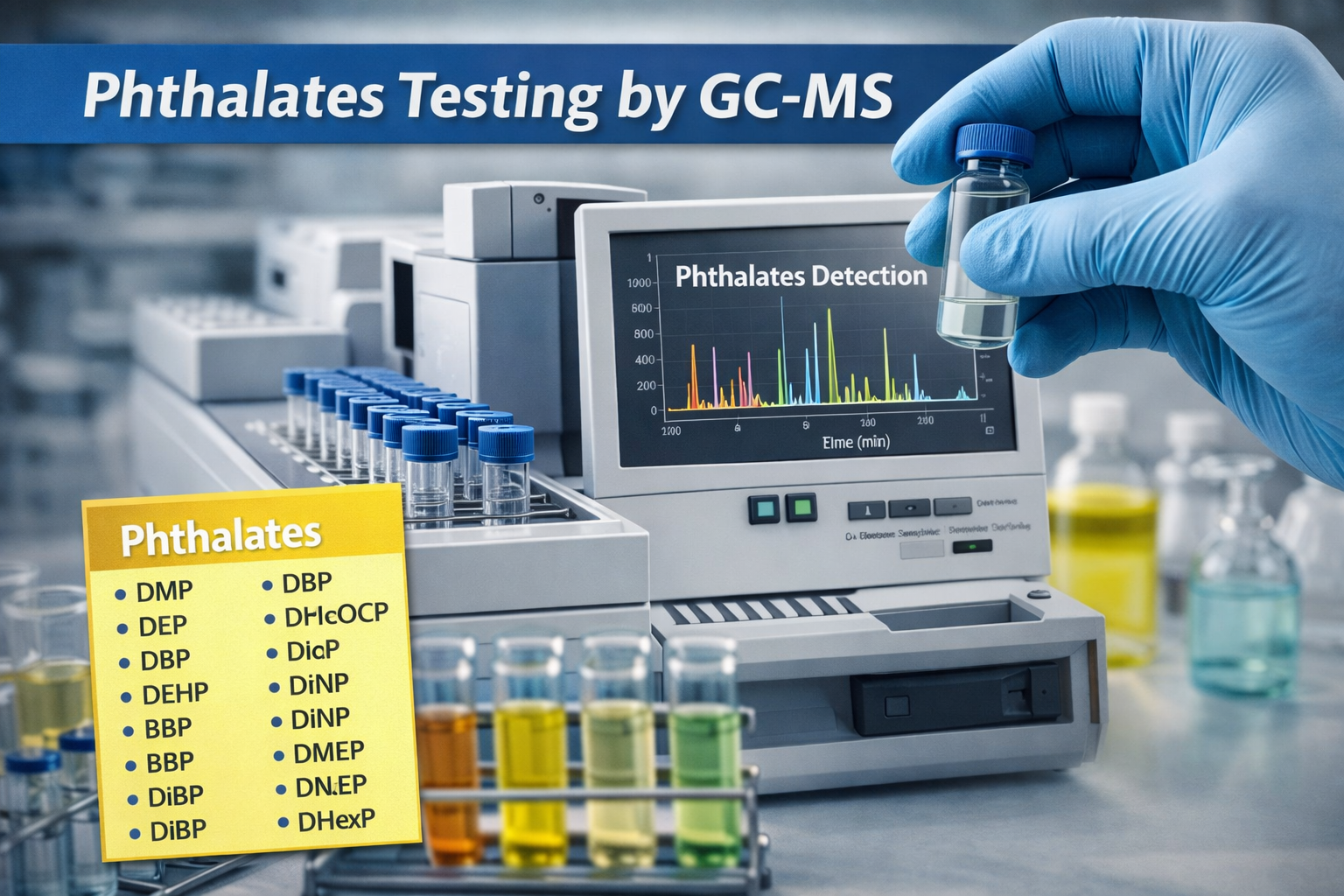
Pentyl Labs’ GC-MS method detects a broad panel of phthalates and related compounds, including:
-
Dimethyl phthalate (DMP) – LOQ: 1 ppm
-
Diethyl phthalate (DEP) – LOQ: 1 ppm
-
Dibutyl phthalate (DBP) – LOQ: 1 ppm
-
Diethylhexyl phthalate (DEHP) – LOQ: 1 ppm
-
Butyl benzyl phthalate (BBP) – LOQ: 1 ppm
-
Di-n-octyl phthalate (DnOP) – LOQ: 1 ppm
-
Diisodecyl phthalate (DiDP) – LOQ: 5 ppm
-
Diisopropyl phthalate (DiPrP) – LOQ: 1 ppm
-
Diisobutyl phthalate (DiBP) – LOQ: 1 ppm
-
Diisopentyl phthalate (DiPP) – LOQ: 1 ppm
-
Isopentyl pentyl phthalate (IPPP) – LOQ: 1 ppm
-
Di-(2-methoxyethyl) phthalate (DMEP) – LOQ: 1 ppm
-
Di-n-pentyl phthalate (DnPP) – LOQ: 1 ppm
-
Diisononyl phthalate (DiNP) – LOQ: 5 ppm
-
Dihexyl phthalate (DHexP) – LOQ: 1 ppm
-
Dicyclohexyl phthalate (DCHexP) – LOQ: 1 ppm
-
Tributyl acetyl citrate (TBAC) – LOQ: 1 ppm
-
Texanol diisobutyrate (TXIB) – LOQ: 1 ppm
Testing may be performed on raw materials, fragrances, bulk formulations, or finished products. As a result, manufacturers can evaluate phthalate content at multiple stages of development or production.
Phthalates testing supports compliance with regulations such as California Proposition 65, EU REACH, and various retailer or brand-specific restricted substance lists. The data also supports internal risk assessments and supplier qualification programs.
This service is commonly included within broader Chemical Analysis Services and Regulatory Compliance Testing programs. Guidance from agencies such as the European Chemicals Agency (ECHA) and the California Office of Environmental Health Hazard Assessment (OEHHA) defines regulatory expectations for phthalate content.
Overall, phthalates testing by GC-MS provides reliable data that helps manufacturers protect consumers, meet regulatory requirements, and maintain confidence in product safety.


