
Shop
Description
PFAS Testing
What PFAS Testing Measures
PFAS testing evaluates products for the presence of per- and polyfluoroalkyl substances (PFAS). These synthetic chemicals are widely used for their water- and oil-resistant properties but are known to persist in the environment and may present health concerns.
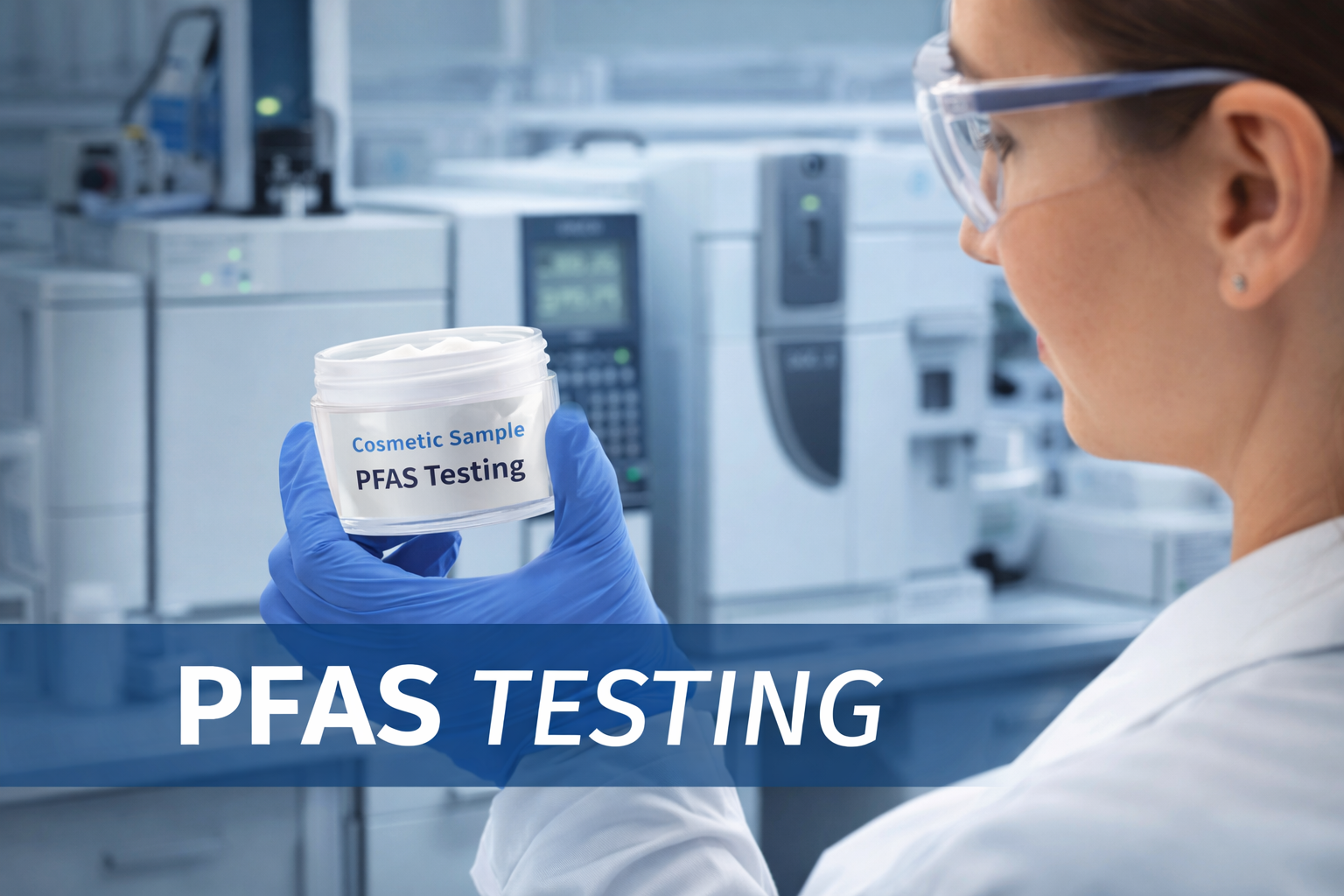
Pentyl Labs performs PFAS testing for cosmetics, packaging, raw materials, and consumer goods. Analysis uses advanced liquid chromatography–tandem mass spectrometry (LC-MS/MS) and gas chromatography–mass spectrometry (GC-MS) techniques targeting 545 individual PFAS compounds, including both legacy and emerging substances.
Why PFAS Testing Is Important
PFAS compounds are receiving increasing regulatory and consumer attention worldwide. As a result, manufacturers increasingly need to determine whether PFAS are present in their products.
PFAS testing helps companies:
-
Identify potential contamination sources
-
Verify supplier claims
-
Support compliance with evolving regulations
-
Demonstrate responsible product development
Testing also improves transparency with retailers, regulators, and consumers.
Analytical Method Overview
Pentyl Labs uses LC-MS/MS and GC-MS analytical methods designed for trace-level PFAS detection. These techniques provide high sensitivity and selectivity across a broad range of PFAS chemistries.
Testing is performed with reference to internationally recognized analytical frameworks including:
-
EN ISO 23702-1:2023
-
EN 17681-1:2022
-
EN 17681-2:2022
Careful sample preparation allows accurate analysis of complex matrices such as creams, liquids, powders, textiles, and packaging materials. As a result, PFAS testing results remain reliable even for challenging formulations.
Products Commonly Tested
PFAS testing is commonly performed on:
-
Cosmetics and personal care products
-
Packaging materials and coatings
-
Textiles and treated fabrics
-
Raw materials and ingredients
-
Finished consumer products
Manufacturers often request PFAS testing during product development, reformulation, or prior to market launch.
How Results Are Used
PFAS testing results support regulatory reviews, customer documentation, and internal product safety assessments. Based on the results, companies can determine whether additional PFAS-specific actions or reformulation steps are necessary.
PFAS testing is frequently performed alongside Total Fluorine Screening and other chemical analysis services to provide a broader understanding of fluorinated compounds in a product.
Summary
PFAS testing provides essential analytical data that supports product safety, regulatory planning, and informed decision-making. Targeted LC-MS/MS and GC-MS analysis of 545 PFAS compounds provides reliable insight across a wide range of consumer products and materials.


