
Shop
Description
OECD 301B – CO₂ Evolution Test (Aerobic Biodegradability)
Overview of the Test
OECD 301B biodegradability testing measures how quickly microorganisms break down an organic substance under aerobic conditions. The test tracks carbon dioxide (CO₂) released during biodegradation. Regulators and manufacturers use this method to determine whether a material meets the criteria for ready biodegradability.
Many regulatory programs prefer this test because it relies on microbial activity rather than animal testing. As a result, OECD 301B serves as a widely accepted standard for environmental assessment.
How the Test Works
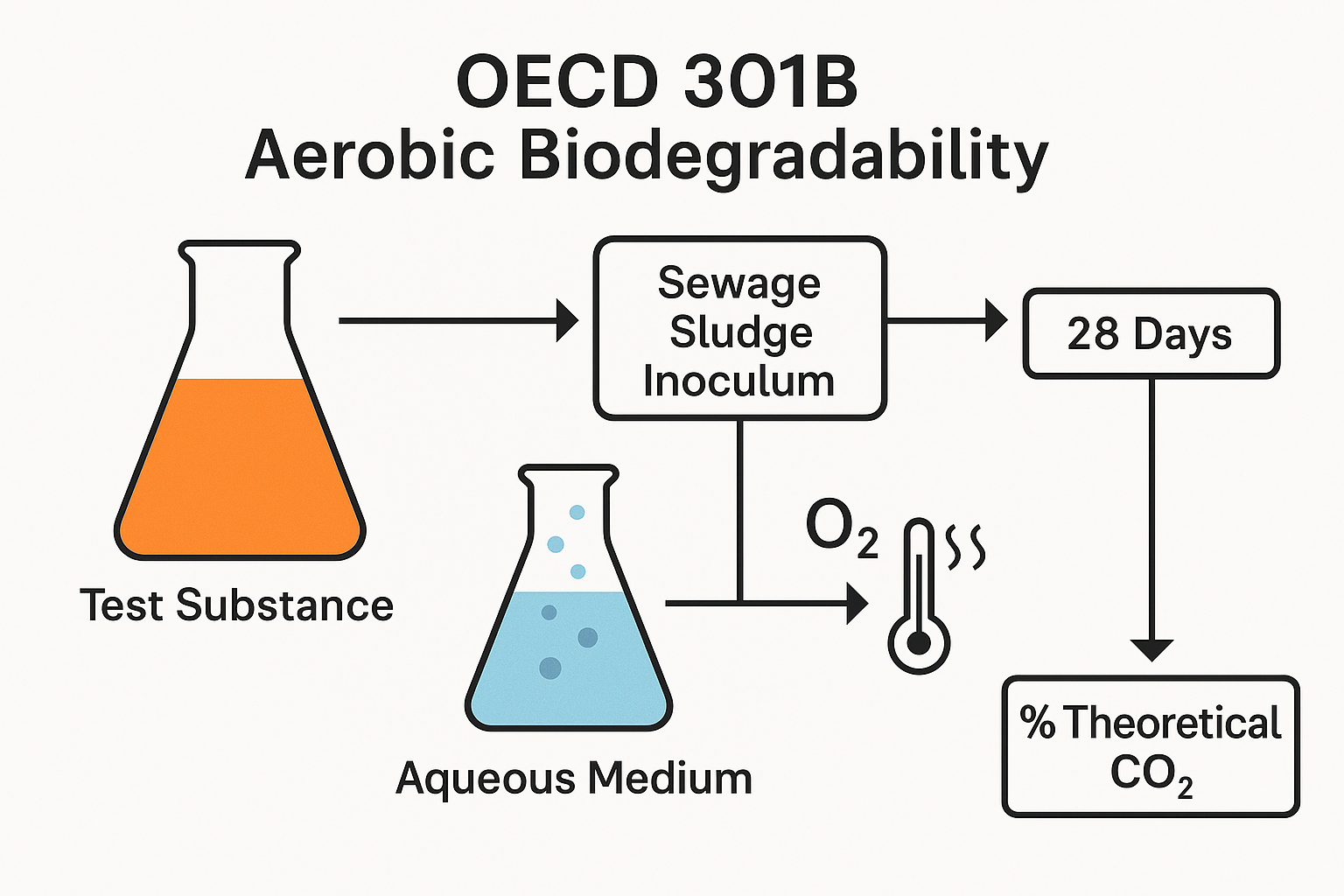
During the study, analysts place the test substance into a controlled system that contains an active microbial inoculum. The microorganisms use the substance as a carbon source. As biodegradation occurs, CO₂ forms and is captured for measurement.
Analysts measure CO₂ production at regular intervals throughout the study. They compare the measured CO₂ to the theoretical maximum carbon dioxide value. This comparison allows calculation of the biodegradation percentage.
Study Duration and Evaluation Criteria
The OECD 301B test typically runs for 28 days. To qualify as readily biodegradable, the substance must reach 60% biodegradation within a defined 10-day window after degradation begins. These criteria provide clear and consistent performance benchmarks.
Because of these defined limits, companies often use this test for regulatory submissions and environmental reviews.
Applications of OECD 301B Testing
Manufacturers commonly request OECD 301B biodegradability testing for:
-
Surfactants
-
Cosmetic ingredients
-
Cleaning agents
-
Raw materials
-
Formulated products
The results support ingredient selection, sustainability goals, and environmental safety assessments. In addition, the data may support eco-labeling or regulatory compliance efforts.
Program Integration and Regulatory Guidance
Many companies include this test within broader Biodegradability Testing and Environmental Fate Testing programs. These programs help evaluate how products behave once released into the environment.
The Organisation for Economic Co-operation and Development (OECD) provides detailed guidance for the OECD 301B method. This guidance defines study design, acceptance criteria, and reporting requirements.
Why Companies Use This Test
Overall, OECD 301B biodegradability testing offers a reliable and ethical way to assess aerobic biodegradation. Because many regions restrict animal testing, this method provides a trusted alternative. It also delivers clear, reproducible data that supports responsible product development and environmental compliance.


