

Shop
Description
GC-FID Fingerprinting
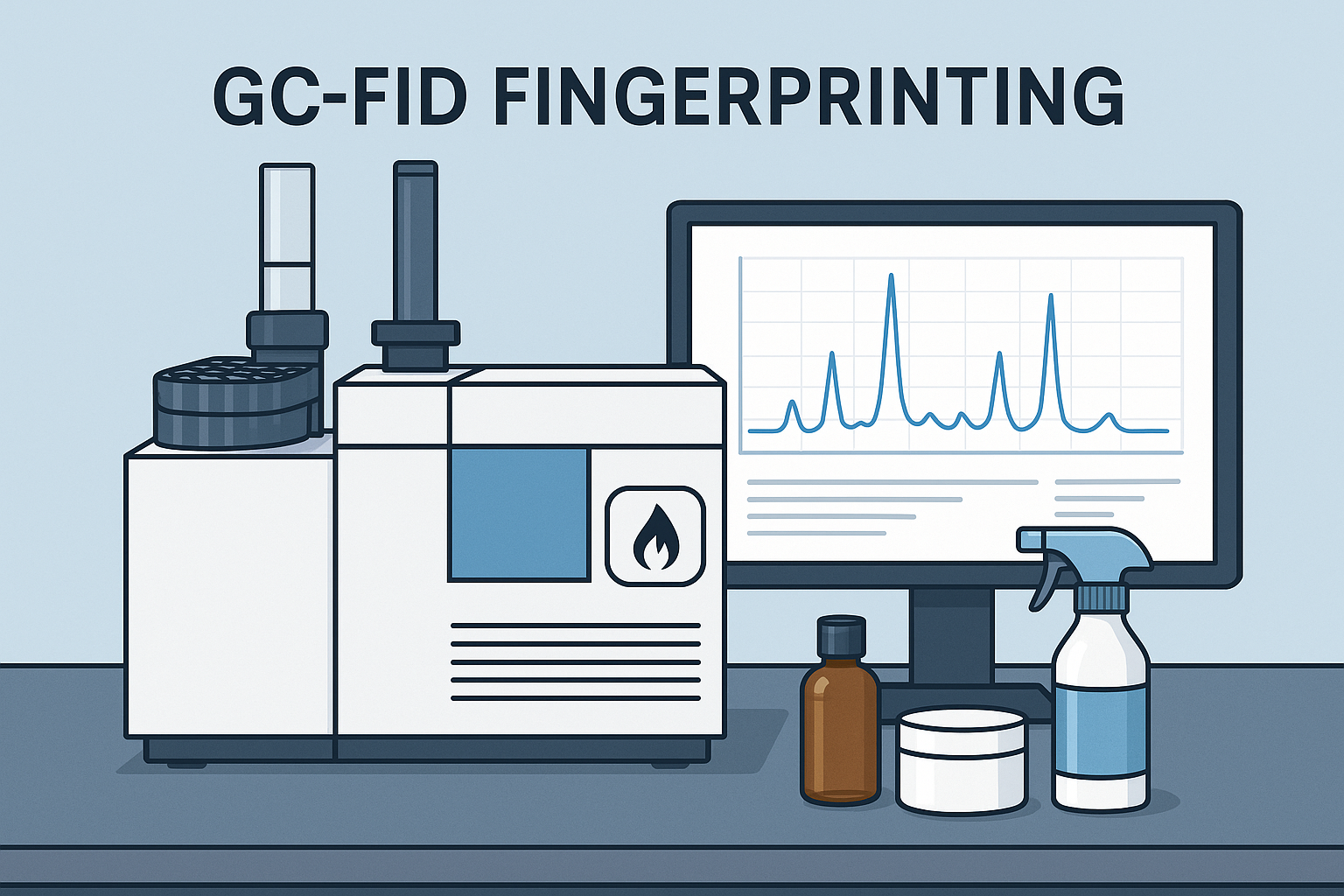
GC-FID fingerprinting evaluates the identity, quality, and consistency of raw materials, cosmetic formulations, cleaning products, and other complex mixtures. This technique helps manufacturers confirm product authenticity and monitor changes over time.
Gas chromatography with flame ionization detection separates volatile and semi-volatile organic compounds within a sample. The detector responds to most organic substances, which allows the method to generate a detailed chromatographic profile. This profile acts as a chemical “fingerprint” unique to the product or material.
Analysts compare GC-FID fingerprints against reference standards, approved specifications, or previous production batches. Through this comparison, manufacturers can confirm product identity and detect unexpected changes. These changes may result from raw material variation, processing differences, or potential adulteration.
GC-FID fingerprinting works well for compounds such as hydrocarbons, alcohols, esters, fatty components, and other organic materials. Because of its strong sensitivity and reproducibility, the method supports both qualitative comparison and quantitative trend monitoring.
Manufacturers commonly use GC-FID fingerprinting during raw material qualification, supplier verification, and incoming quality control. In addition, the technique supports batch-to-batch consistency checks during routine production. When formulation changes occur, fingerprinting helps teams understand how those changes affect the overall chemical profile.
This service also plays a role in stability monitoring. Over time, chemical profiles may shift due to degradation, oxidation, or interaction between ingredients. By comparing fingerprints at different time points, manufacturers can track product stability and identify early signs of change.
GC-FID fingerprinting is often included within broader Chemical Analysis Services and Authenticity Testing programs. Guidance from organizations such as ASTM International supports the use of chromatographic techniques for material identification and quality evaluation.
Overall, GC-FID fingerprinting provides a practical and reliable way to verify product identity, protect quality, and maintain confidence across production and supply chains.

