
Shop
Description
Differential Scanning Calorimetry (DSC) Analysis
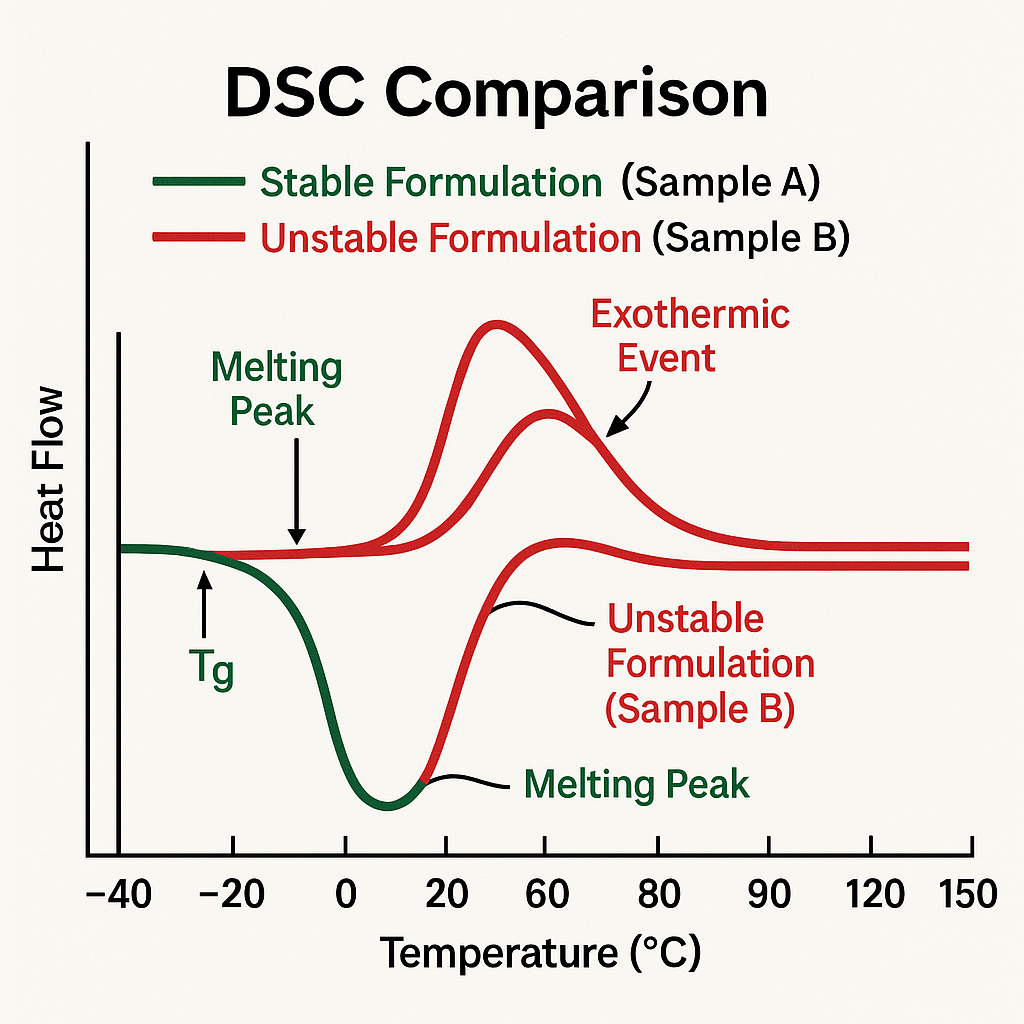
DSC analysis evaluates the thermal behavior of materials by measuring heat flow as a function of temperature. Differential scanning calorimetry helps identify key thermal events such as melting point, crystallization, glass transition temperature (Tg), and thermal stability. These measurements provide valuable insight into material performance and formulation behavior.
Pentyl Labs performs DSC analysis on a wide range of sample types, including cosmetics, polymers, waxes, emulsions, excipients, and raw ingredients. Because many formulations undergo temperature changes during manufacturing, storage, and use, understanding thermal behavior plays an important role in product development and quality control.
During analysis, the instrument subjects a sample and a reference to a controlled temperature program. As the sample absorbs or releases heat, the system records thermal transitions. These transitions help identify phase changes, compatibility concerns, and potential stability issues that may affect texture, appearance, or shelf life.
Manufacturers often use DSC analysis to support formulation optimization and ingredient selection. For example, DSC can help compare raw material batches, evaluate polymorphism, or assess compatibility between ingredients in complex systems. The data also supports investigations related to crystallization behavior, phase separation, or unexpected changes during storage.
DSC analysis plays a role in quality assurance programs as well. By establishing thermal fingerprints, manufacturers can monitor batch-to-batch consistency and detect deviations early. This approach helps reduce variability and improve process control.
In addition, DSC data supports regulatory documentation and technical reporting. Thermal analysis results often appear in development reports, specification justifications, and stability assessments. Because the method provides reproducible and quantitative data, it strengthens technical decision-making.
This service is commonly included within broader Material Characterization Services and Stability and Compatibility Testing programs. Guidance from organizations such as ASTM International outlines standardized approaches for thermal analysis methods.
Overall, DSC analysis provides practical and reliable information that supports product performance, stability evaluation, and informed formulation decisions across multiple industries.


