
Shop
Description
What Is Adsorbable Organic Fluorine (AOF) Testing?
Adsorbable Organic Fluorine (AOF) testing, performed in accordance with EPA Method 1621, is a screening technique used to measure the total concentration of organically bound fluorine present in aqueous samples. This method is commonly used as an indicator of potential PFAS contamination without targeting individual PFAS compounds.
Unlike compound-specific PFAS analyses, AOF provides a single total fluorine result, making it an effective tool for early-stage screening, compliance evaluations, and product development decision-making.
Why AOF Testing Matters
PFAS compounds contain strong carbon–fluorine bonds that resist degradation and can persist in products and the environment. AOF testing helps manufacturers and regulators:
-
Screen samples for total organic fluorine
-
Identify samples that may require follow-up PFAS analysis
-
Reduce costs compared to broad PFAS compound panels
-
Support regulatory risk assessments and compliance strategies
AOF is particularly useful when the presence or absence of fluorinated organic compounds is more important than identifying individual PFAS species.
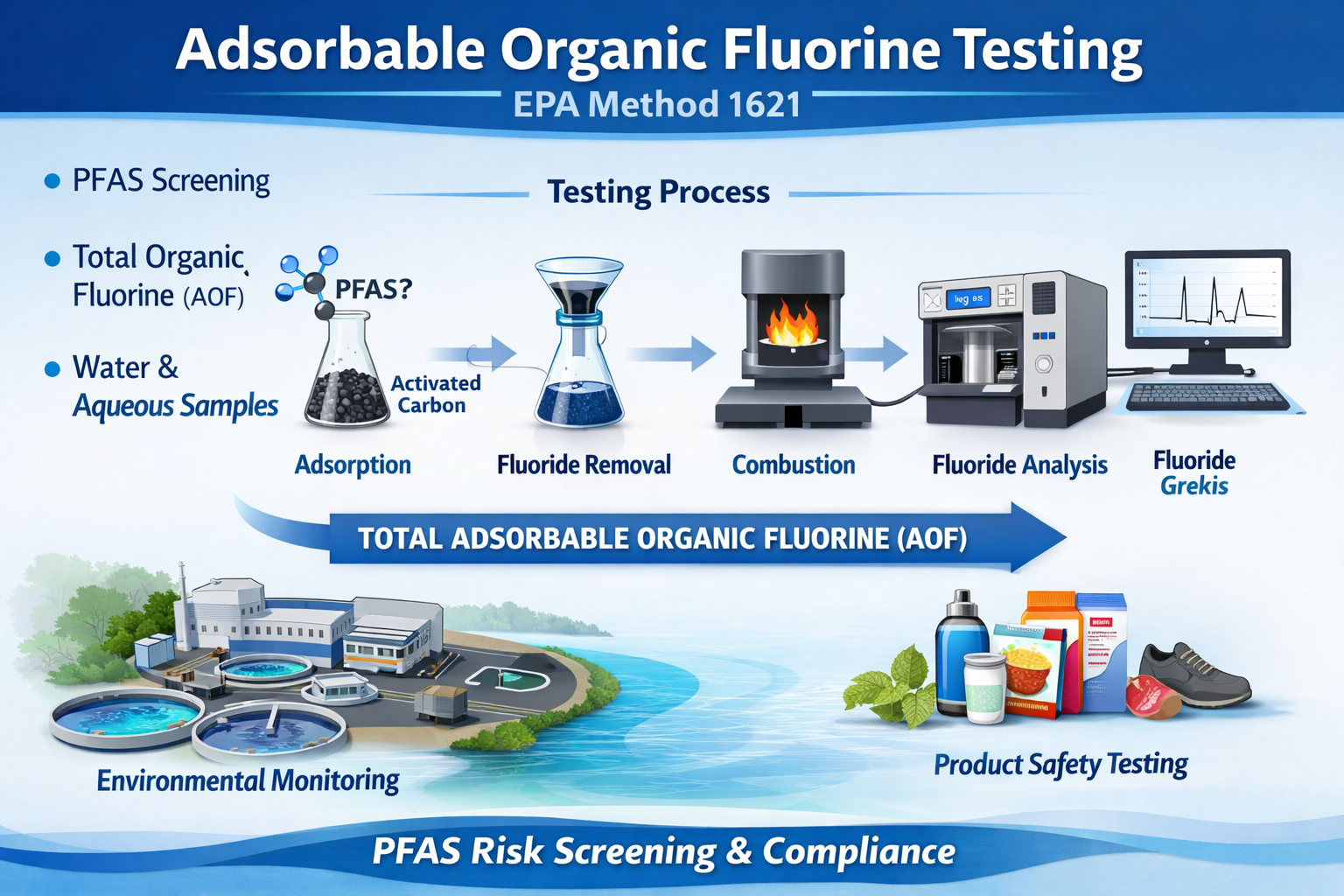
EPA Method 1621 – How the Test Works
EPA Method 1621 measures organic fluorine using the following general process:
-
Adsorption of organic fluorine compounds onto activated carbon
-
Removal of inorganic fluoride through washing steps
-
Combustion of the activated carbon to convert organic fluorine to hydrogen fluoride
-
Detection and quantification of fluoride using ion chromatography
The final result is reported as total adsorbable organic fluorine, typically expressed in µg/L as F.
Common Applications of AOF Testing
Adsorbable Organic Fluorine testing is commonly used for:
-
PFAS screening assessments
-
Water and wastewater monitoring
-
Consumer product development support
-
Regulatory and compliance investigations
-
Prioritization of samples for targeted PFAS testing
-
Comparative studies across formulations or lots
AOF vs Targeted PFAS Testing
| AOF Testing | Targeted PFAS Testing |
|---|---|
| Measures total organic fluorine | Measures individual PFAS compounds |
| Faster and more cost-effective | Higher analytical specificity |
| Ideal for screening | Ideal for confirmatory analysis |
| Non-compound specific | Compound-specific results |
Many clients use AOF testing as a first-step evaluation, followed by targeted PFAS analysis if elevated fluorine levels are detected.
Sample Types
-
Aqueous product extracts
-
Water-based formulations
-
Rinse waters and leachates
-
Environmental water samples
If your sample is not clearly aqueous, Pentyl Labs can help determine suitability or recommend alternative testing approaches.
Why Choose Pentyl Labs?
Pentyl Labs provides Adsorbable Organic Fluorine testing with a focus on:
-
Practical regulatory guidance
-
Clear, decision-ready reporting
-
Fast turnaround options
-
Integration with PFAS and Total Organic Fluorine testing strategies
Our team helps clients understand what the data means, not just what the number is.
Related Testing Services
-
PFAS Testing
-
Total Organic Fluorine (TOF)
-
Regulatory Compliance Testing
-
Consumer Product Safety Screening


