
Shop
Description
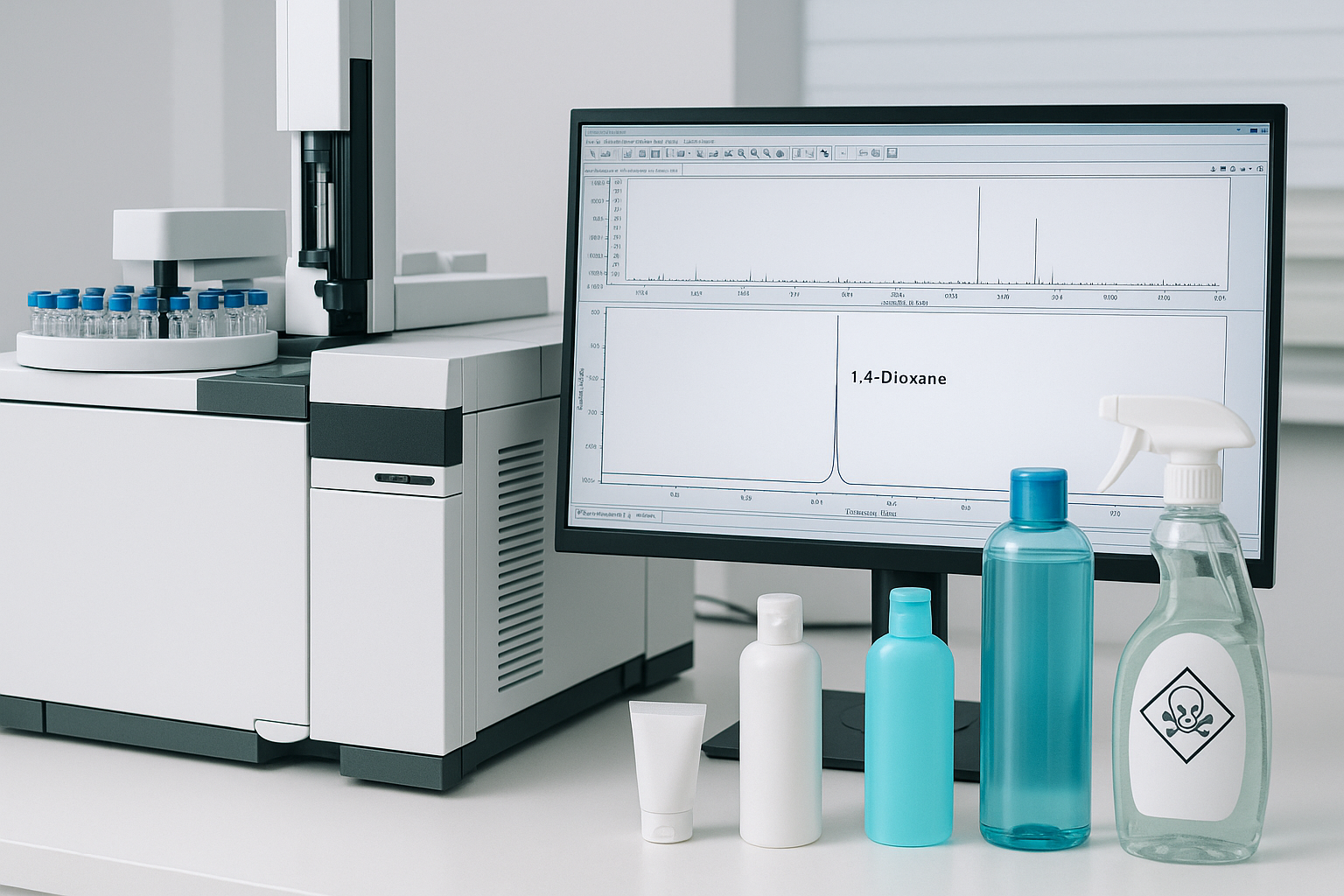
1,4-Dioxane testing helps identify trace amounts of this unwanted chemical in cosmetics, personal care products, and other consumer formulations. Manufacturers do not add 1,4-Dioxane on purpose. Instead, it can form during manufacturing when suppliers use ethoxylated ingredients such as surfactants or emulsifiers. Because of this, many companies test finished products to better understand potential contamination.
Brands often request this testing to support product safety reviews and compliance efforts. Retailers and regulators now expect companies to understand and control trace chemicals in finished goods. As a result, testing has become common for shampoos, conditioners, body washes, liquid soaps, baby products, and other rinse-off or leave-on cosmetics.
Laboratories perform this analysis using sensitive methods that measure very low concentrations. These methods can detect trace levels at parts-per-million or parts-per-billion ranges. Analysts prepare each sample based on the product type, which improves accuracy and consistency. The results help quality teams review raw materials, confirm manufacturing controls, and support safety documentation.
State regulations also drive the need for testing. For example, New York State set limits for trace 1,4-Dioxane in cosmetic and household products sold within the state. In addition, California Proposition 65 requires businesses to evaluate chemical exposure and decide whether consumer warnings apply. Because of these rules, companies often rely on test data to guide compliance decisions.
Many organizations include this service within broader Chemical Analysis Services or Cosmetic Regulatory Testing programs. Guidance from the U.S. Food and Drug Administration (FDA) also encourages manufacturers to understand trace contaminants in consumer products.
Overall, 1,4-Dioxane testing supports safer product development, reduces regulatory risk, and gives brands clear data to support informed decisions.


