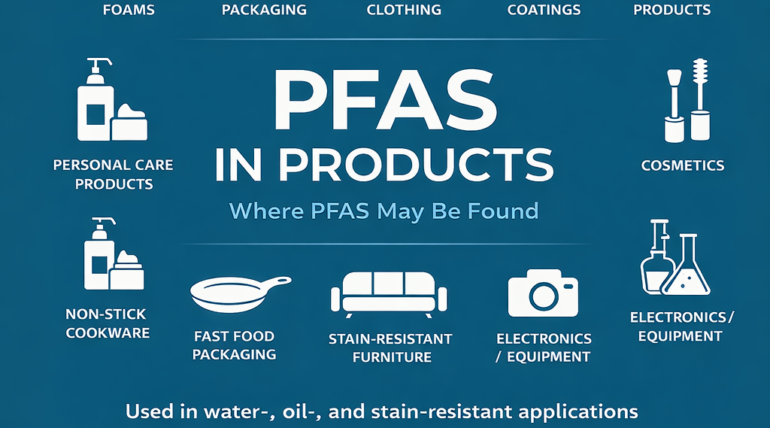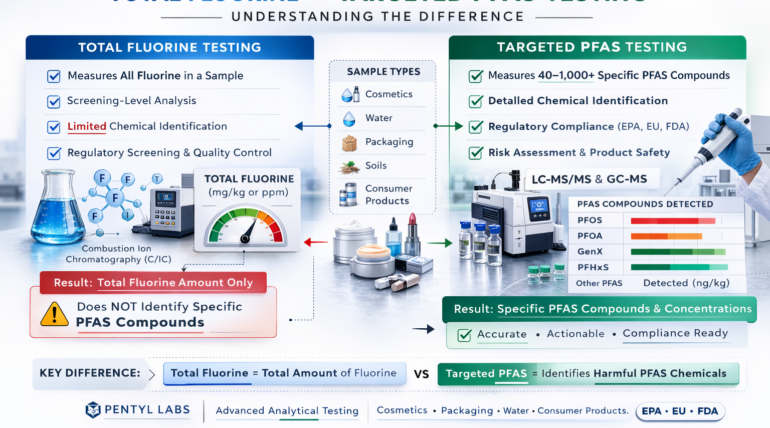
PFAS in products including cosmetics packaging textiles and coatings requiring fluorine testing
March 28, 2026

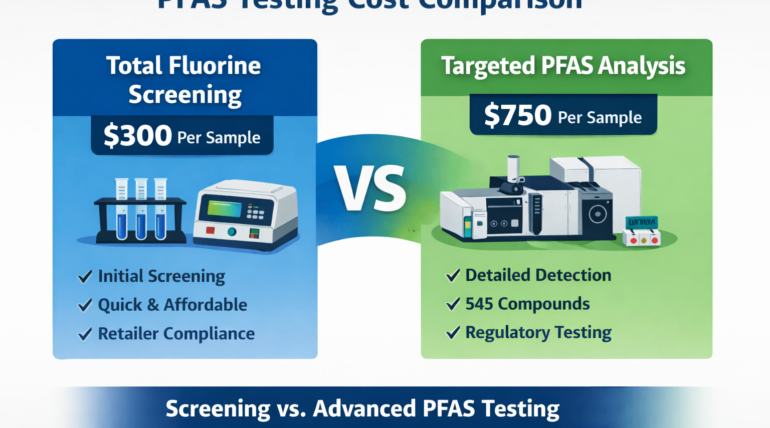
Do I Need PFAS Testing for My Product?

Short Answer You may need PFAS testing if your product contains fluorinated materials, is designed for water/oil resistance, or is sold in regulated markets or through major retailers. With increasing regulatory pressure and retailer requirements, PFAS testing is quickly becoming a

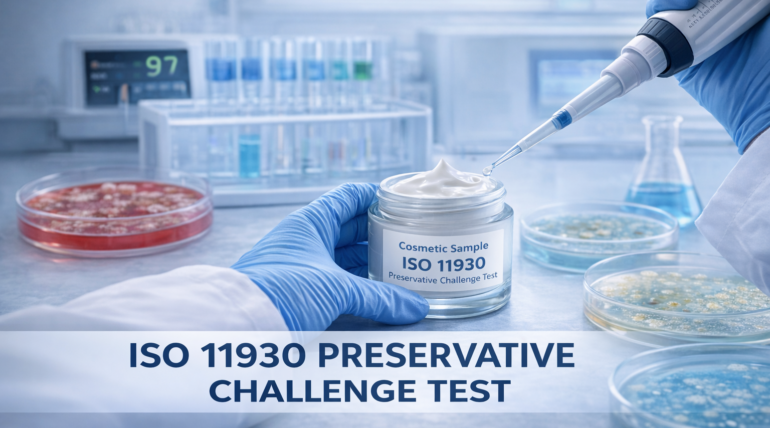
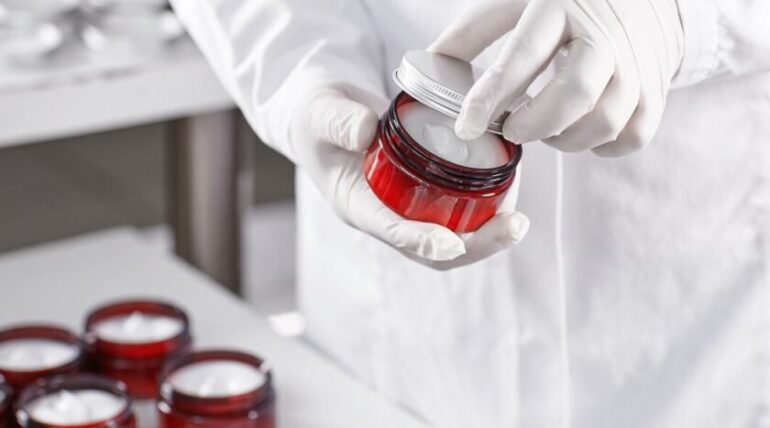
ISO 11930 preservative challenge testing of cosmetic cream sample in microbiology laboratory
March 16, 2026

ISO 11930 Preservative Challenge Test Explained

The ISO 11930 challenge test evaluates whether preservatives in cosmetic and personal care products effectively control microbial contamination. Manufacturers perform this test during product development to ensure formulations remain safe and stable throughout their shelf life. One of the most widely

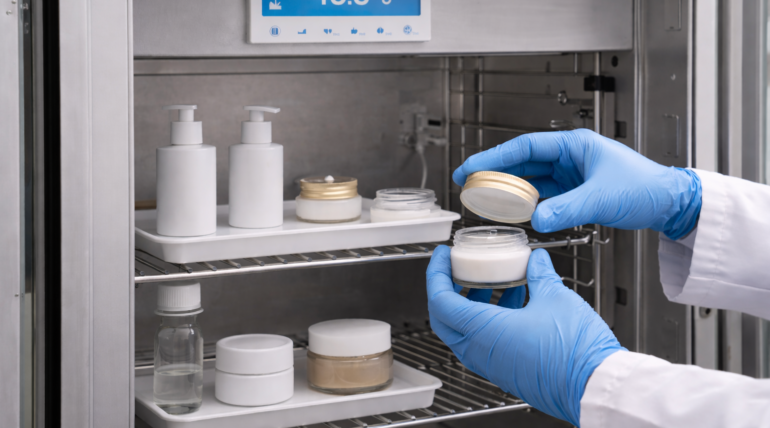
Skincare products undergoing accelerated stability testing in a laboratory environmental chamber at 40°C and controlled humidity.
March 5, 2026

Stability Testing for Skincare Products

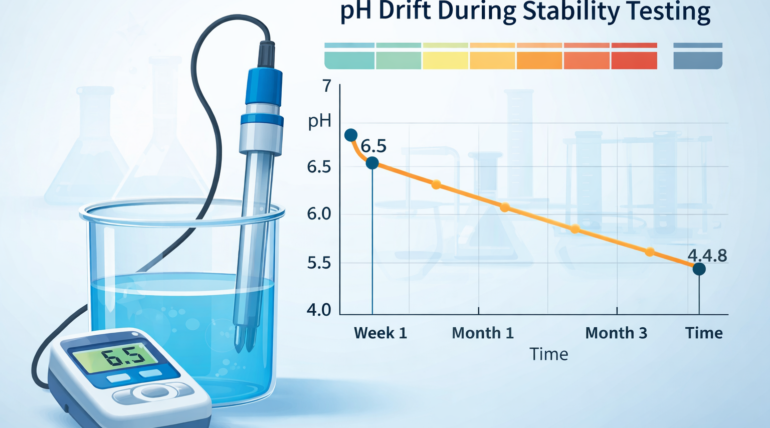
Stability testing for skincare products evaluates how formulations perform over time under different environmental conditions. These studies help determine whether a product maintains its appearance, texture, chemical composition, and safety throughout its intended shelf life. Because skincare formulations often contain sensitive

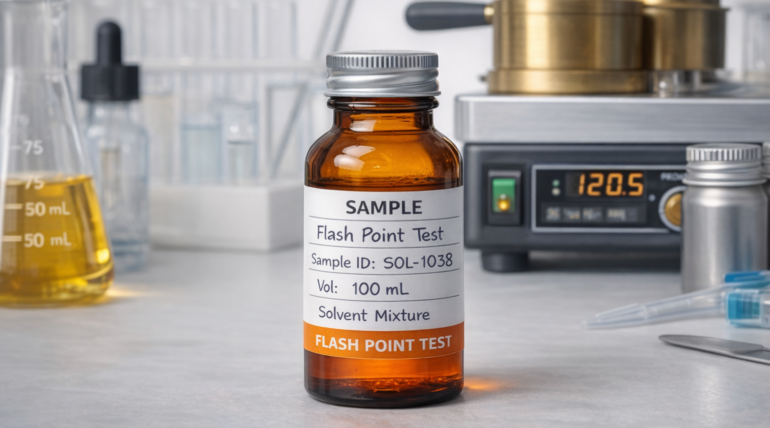
Liquid sample bottle prepared for flash point testing showing labeled solvent sample used for ASTM D93 laboratory analysis.
March 5, 2026

Flash Point Testing Sample Requirements

Flash point testing determines the temperature at which a liquid produces vapors that ignite when exposed to an ignition source. Because accurate measurements depend on proper sample handling, laboratories require specific sample preparation and volume requirements before performing the test. Understanding

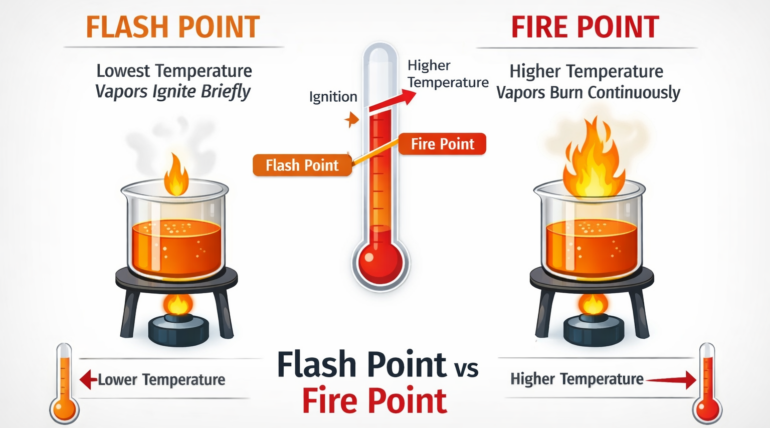
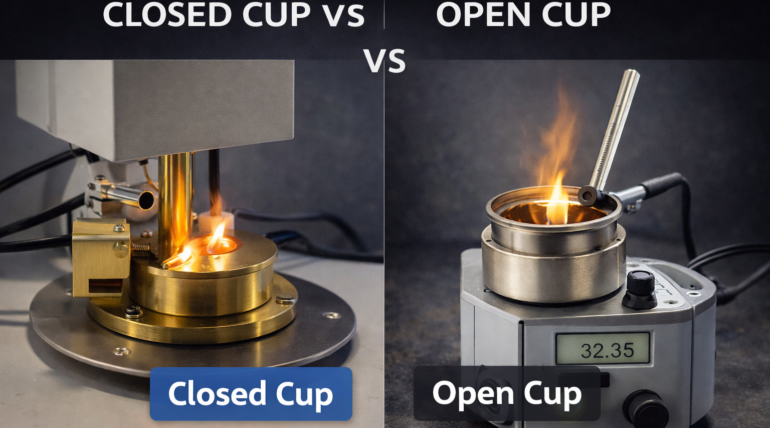
Diagram showing the difference between flash point and fire point where flash point is brief ignition at a lower temperature and fire point is sustained combustion at a higher temperature.
March 5, 2026

Flash Point vs Fire Point: What’s the Difference?

Flash point and fire point are two important measurements used to evaluate the flammability of liquids. Although these terms are often confused, they describe different ignition behaviors. Understanding the difference helps manufacturers, safety professionals, and regulators determine how a material should

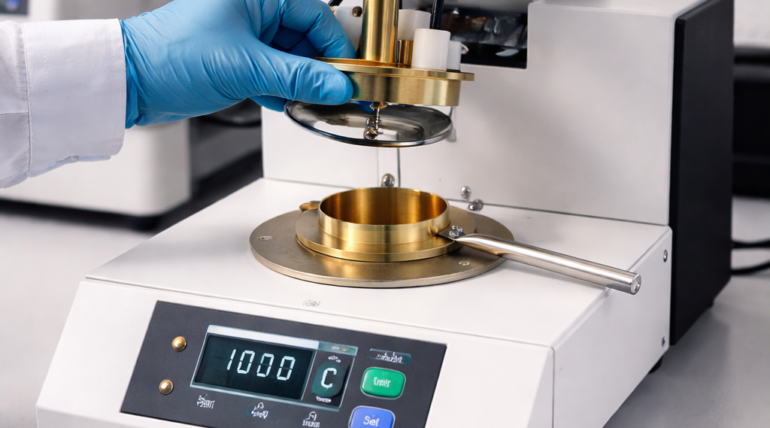
ASTM D93 Pensky-Martens closed cup flash point testing performed using laboratory instrumentation
March 5, 2026

What Is the ASTM D93 Flash Point Test?

The ASTM D93 flash point test determines the temperature at which a liquid produces vapors that ignite under controlled conditions. Laboratories perform this test using the Pensky-Martens closed cup apparatus, which contains vapors during heating. Manufacturers commonly request this method when

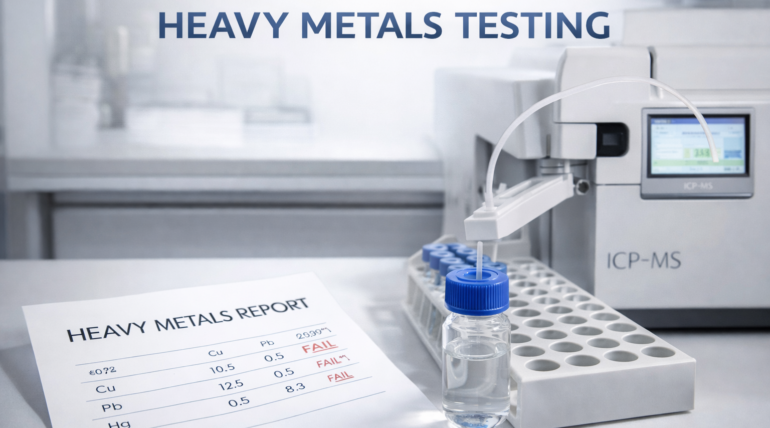
heavy metals testing in cosmetics using ICP-MS laboratory analysis
February 18, 2026

Heavy Metals in Cosmetics: What Are the Limits?

Heavy Metals in Cosmetics Limits Heavy metals in cosmetics limits are regulated or guided by multiple jurisdictions, including the United States and the European Union. While some metals may occur as trace impurities, excessive levels can present safety and regulatory concerns.

February 3, 2026

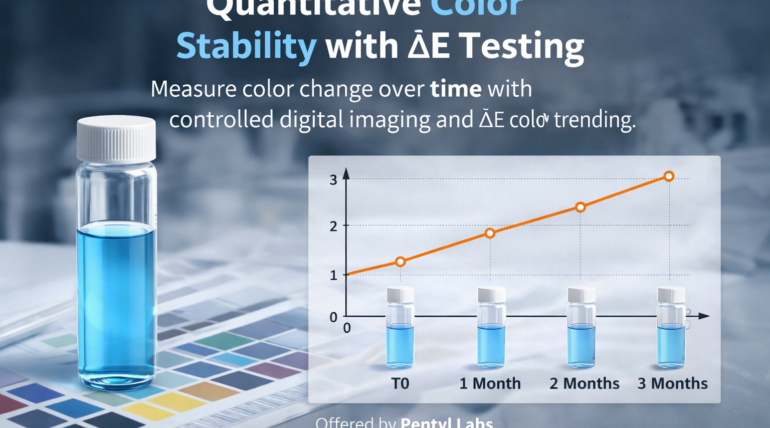
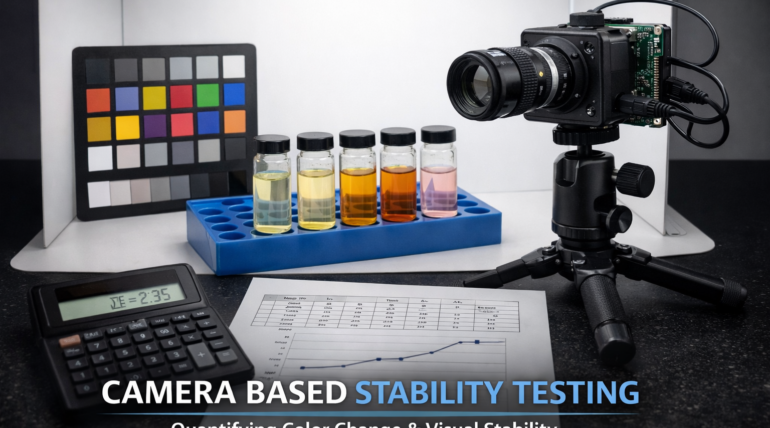
What Is ΔE in Stability Testing?

ΔE in stability testing refers to the measurable color difference between a product’s baseline appearance (T0) and subsequent timepoints during a stability study. Rather than relying only on visual observation, ΔE quantifies how much a product’s color has changed over time.

authenticity testing
November 23, 2025

Why Product Authenticity Matters?

What Is Product Authenticity Testing? Product authenticity testing is the evaluation of a product to determine whether it is genuine, unadulterated, and consistent with its claimed identity, formulation, or origin. It is commonly used to detect counterfeits, investigate suspected adulteration, and

1 2