
Short Answer
You may need PFAS testing if your product contains fluorinated materials, is designed for water/oil resistance, or is sold in regulated markets or through major retailers.
With increasing regulatory pressure and retailer requirements, PFAS testing is quickly becoming a standard expectation—not just an optional analysis.
What Are PFAS and Why Are They a Concern?
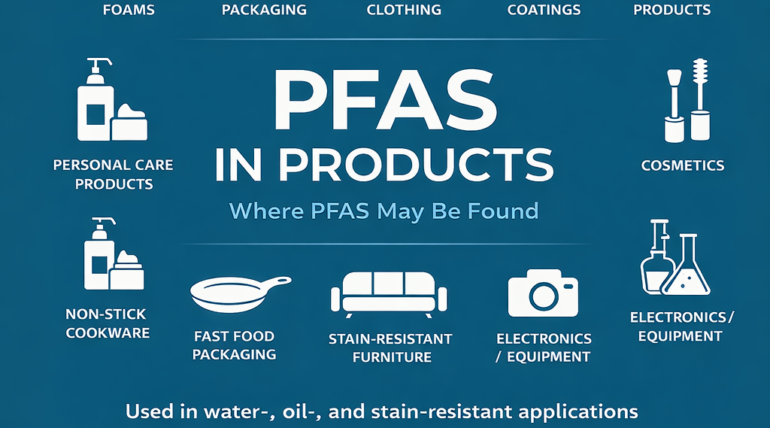
PFAS (per- and polyfluoroalkyl substances) are a large group of synthetic chemicals used to provide:
- Water resistance
- Oil and grease repellency
- Long-lasting performance in formulations
They are commonly found in:
- Cosmetics and personal care products
- Food packaging and paper-based materials
- Textiles and performance coatings
- Cleaning and specialty chemical products
⚠️ PFAS are often referred to as “forever chemicals” because they persist in the environment and the human body—leading to increasing regulatory scrutiny worldwide.
When Do You Need PFAS Testing?
🧴 Cosmetics & Personal Care Products
PFAS testing is strongly recommended if your product:
- Claims to be long-lasting, waterproof, or transfer-resistant
- Contains fluorinated ingredients (e.g., PTFE or similar materials)
- Is sold in states like California or New York, where restrictions are tightening
🍔 Food Contact Materials & Packaging
High priority category:
- Grease-resistant paper
- Food wrappers and containers
👉 Many jurisdictions are actively restricting or banning PFAS in food contact applications.
🧼 Cleaning Products & Industrial Formulations
- Surface protectants
- Specialty coatings
- High-performance chemical blends
Even trace PFAS contamination can raise compliance concerns.
🧵 Textiles, Coatings, and Treated Materials
- Water-resistant fabrics
- Outdoor gear
- Upholstery treatments
🏬 Retailer Requirements Are Driving Testing
Many major retailers and global brands now require Total Fluorine (TF) screening as part of their product compliance programs.
This applies across categories such as:
- Cosmetics and personal care
- Packaging and food contact materials
- Consumer goods and treated textiles
👉 In these programs:
- TF is used as a screening tool
- Products with detectable fluorine may require further PFAS analysis or corrective action
⚠️ Some retailers also enforce internal fluorine limits, meaning even low levels can trigger additional review or rejection.
Types of PFAS Testing
1. Total Fluorine (TF)
- Measures overall fluorine content
- Fast, cost-effective screening tool
- Commonly required by retailers
2. Total Organic Fluorine (TOF)
- Focuses on organic fluorinated compounds
- Helps differentiate potential PFAS from inorganic sources
3. Targeted PFAS Analysis (LC-MS/MS, GC-MS)
- Identifies specific PFAS compounds (hundreds of analytes)
- Required for:
- Regulatory compliance
- Legal or litigation support
- Detailed risk assessment
PFAS Testing Cost
At Pentyl Labs, PFAS testing is structured based on the level of detail required:
- Total Fluorine (TF): $300 per sample
- Total Organic Fluorine (TOF): $300 per sample
- Targeted PFAS Analysis (545 compounds): $750 per sample
How to Choose the Right Test
| Situation | Recommended Approach |
|---|---|
| You want a quick screen | Start with Total Fluorine (TF) |
| You want confirmation of organic fluorine | Use TOF |
| You need detailed identification | Go with Targeted PFAS (545 panel) |
| You’re facing regulatory or retailer requirements | Targeted PFAS (545 panel) |
Recommended Testing Strategy
Most clients follow a tiered approach:
- Begin with Total Fluorine (TF) (often required by retailers)
- If fluorine is detected → proceed to Targeted PFAS analysis
- Use results for compliance, supplier validation, or risk mitigation
👉 This approach balances cost efficiency with regulatory confidence
Common Mistakes to Avoid
- Assuming “PFAS-free” without analytical confirmation
- Ignoring retailer or state-specific requirements
- Using outdated or limited PFAS panels
- Testing only finished products and not raw materials
Typical Sample Requirements
- Liquids: ~50–100 mL
- Solids: ~20–50 g
- Packaging: full component or representative section
Bottom Line
You should strongly consider PFAS testing if:
- Your product is sold in regulated markets
- Your product uses performance-driven materials
- Your customers or retailers require compliance documentation
- You want to proactively manage regulatory and legal risk
Need Help Determining PFAS Risk?
At Pentyl Labs, we support clients with:
- Retailer-driven PFAS compliance programs
- Total Fluorine and TOF screening
- Targeted PFAS analysis (545 compounds)
👉 Contact [email protected] to get started or request a quote.
Total Fluorine vs TOF vs Targeted PFAS Testing: What’s the Difference?
PFAS Testing Cost: What to Expect and How to Choose the Right Approach


