

Shop
Description
Phenoxyethanol Assay by HPLC
Overview of the Analysis
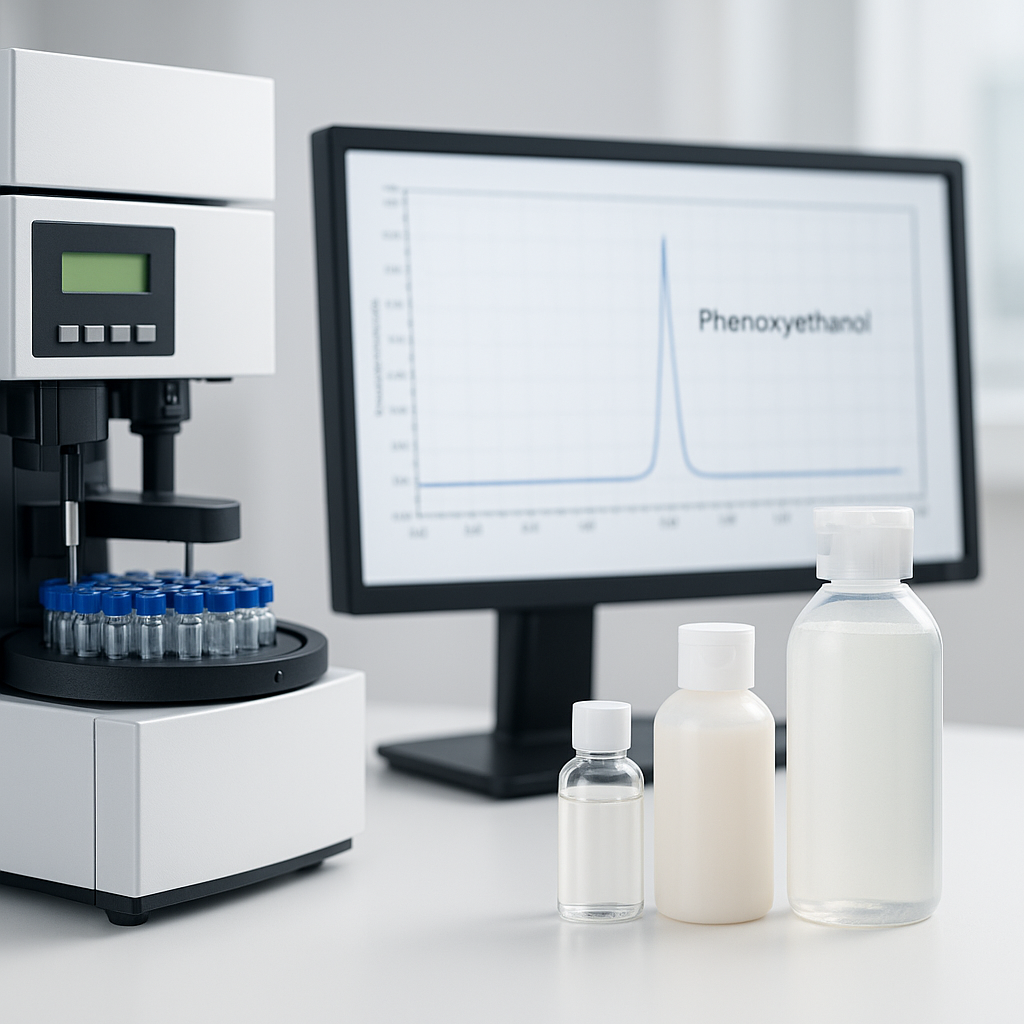
Phenoxyethanol assay by HPLC measures the amount of phenoxyethanol preservative in cosmetic, personal care, pharmaceutical, and cleaning products. Manufacturers use this test to confirm preservative levels and protect product safety. Because phenoxyethanol helps control microbial growth, accurate testing supports stable and reliable formulations.
Phenoxyethanol appears in many product types, including creams, lotions, gels, and liquids. For this reason, routine testing helps brands confirm that preservative levels remain consistent across batches.
Analytical Method and Sample Types
Pentyl Labs performs phenoxyethanol analysis using high-performance liquid chromatography (HPLC). This method separates phenoxyethanol from other ingredients and measures it with high accuracy. In addition, HPLC provides strong sensitivity across a wide range of concentrations.
Testing can be performed on raw materials, bulk formulations, or finished products. As a result, manufacturers can evaluate preservative levels during development, production, or final release. This flexibility supports formulation work, quality control, and batch approval decisions.
Why Phenoxyethanol Testing Matters
Manufacturers often request a phenoxyethanol assay by HPLC to verify formulation accuracy and maintain product quality. Testing also helps identify changes linked to raw material variation or processing adjustments. Therefore, regular analysis supports better control over finished products.
In addition, regulatory authorities limit phenoxyethanol use in cosmetics. Under EU Cosmetic Regulation (EC) No. 1223/2009, finished products may contain up to 1.0% phenoxyethanol. Because of this limit, reliable analytical data supports compliance reviews and safety documentation.
Program Integration and Compliance Support
Phenoxyethanol testing is commonly performed alongside preservative efficacy testing and stability studies. Together, these evaluations provide a clearer understanding of preservative performance over a product’s shelf life.
Pentyl Labs follows validated analytical procedures and established quality practices. As a result, clients receive clear and reproducible results they can trust. These results support internal reviews, regulatory submissions, and product development decisions.
Overall, a phenoxyethanol assay by HPLC provides dependable data that helps manufacturers maintain formulation accuracy, meet regulatory expectations, and protect consumer safety.

