
Total Organic Fluorine (TOF) Testing – EN 14582

Total Organic Fluorine Testing: EN 14582 screening method used as a prerequisite test for PFAS risk evaluation in products and materials.

Price per sample:

$300

Additional information

Turnaround Time

3 weeks

Sample Size

30 grams

Quantity

Total Organic Fluorine (TOF) Testing – EN 14582

What Total Organic Fluorine Screening Measures

Total Organic Fluorine (TOF) testing measures the amount of organically bound fluorine present in a sample. Pentyl Labs performs this analysis in accordance with EN 14582, a standardized combustion-based method widely used as a PFAS screening and prerequisite test.

Rather than identifying individual fluorinated compounds, TOF screening reports a single value that represents the total amount of organic fluorine in the material. This approach provides a fast and cost-effective way to evaluate whether fluorinated substances may be present.

Why TOF Screening Is Used for PFAS Evaluation

Manufacturers often use organic fluorine screening as an early step in PFAS risk assessment. Because all PFAS compounds contain carbon–fluorine bonds, elevated TOF results may indicate the presence of PFAS or other fluorinated chemicals.

As a result, TOF testing helps determine whether further compound-specific PFAS analysis is necessary. This strategy allows manufacturers to focus advanced testing only on samples that show elevated fluorine content, saving time and cost.

Analytical Method Overview (EN 14582)

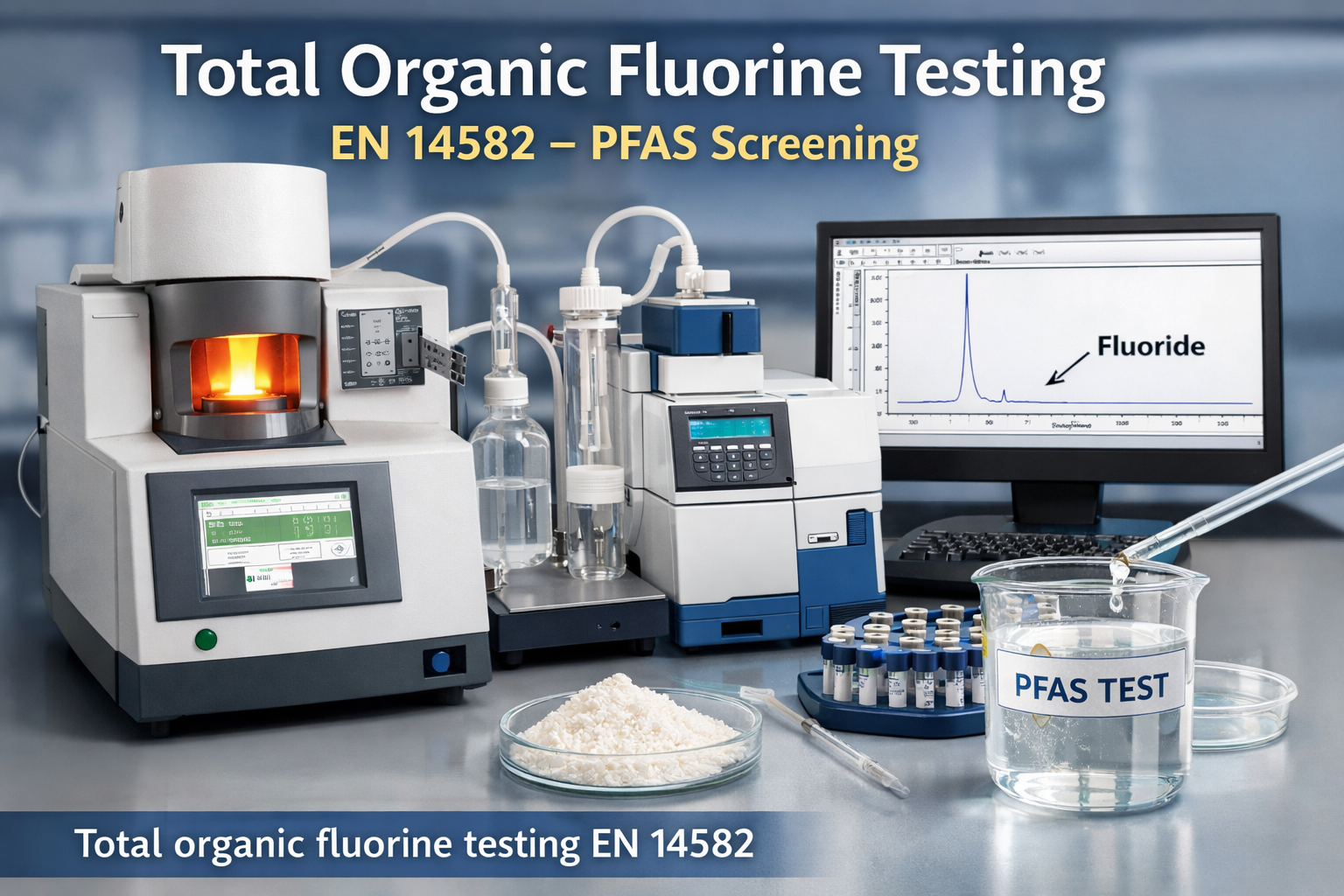
EN 14582 uses high-temperature combustion followed by ion chromatography to quantify fluorine. During testing, the sample undergoes controlled combustion, which converts organically bound fluorine into fluoride ions. The system then measures fluoride concentration with high accuracy.

This method works well across a wide range of matrices and provides consistent results for solids, liquids, and complex formulations.

Products Commonly Evaluated

Total organic fluorine screening applies to cosmetics, personal care products, packaging materials, textiles, coatings, raw materials, and finished goods. Manufacturers commonly request testing during product development, reformulation, or regulatory review.

Testing also supports supplier screening and quality programs. When results show elevated fluorine levels, manufacturers can investigate raw materials or processing aids as potential sources.

How TOF Results Are Used

TOF results guide decision-making. Low values may reduce concern for PFAS presence, while higher values often trigger follow-up testing. Therefore, this screening test plays a key role in structured PFAS evaluation strategies.

This service is commonly used alongside Chemical Analysis Services and PFAS Testing Services to provide a more complete understanding of formulation risk.

Guidance for EN 14582 is published by the European Committee for Standardization, which defines combustion-based methods for fluorine and halogen determination.

Summary

Overall, total organic fluorine screening provides a practical and efficient tool for identifying potential fluorinated compounds. EN 14582 delivers reliable data that supports informed testing decisions, regulatory readiness, and responsible product management.

Description

Total Organic Fluorine (TOF) Testing – EN 14582

What Total Organic Fluorine Screening Measures

Total Organic Fluorine (TOF) testing measures the amount of organically bound fluorine present in a sample. Pentyl Labs performs this analysis in accordance with EN 14582, a standardized combustion-based method widely used as a PFAS screening and prerequisite test.

Rather than identifying individual fluorinated compounds, TOF screening reports a single value that represents the total amount of organic fluorine in the material. This approach provides a fast and cost-effective way to evaluate whether fluorinated substances may be present.

Why TOF Screening Is Used for PFAS Evaluation

Manufacturers often use organic fluorine screening as an early step in PFAS risk assessment. Because all PFAS compounds contain carbon–fluorine bonds, elevated TOF results may indicate the presence of PFAS or other fluorinated chemicals.

As a result, TOF testing helps determine whether further compound-specific PFAS analysis is necessary. This strategy allows manufacturers to focus advanced testing only on samples that show elevated fluorine content, saving time and cost.

Analytical Method Overview (EN 14582)

EN 14582 uses high-temperature combustion followed by ion chromatography to quantify fluorine. During testing, the sample undergoes controlled combustion, which converts organically bound fluorine into fluoride ions. The system then measures fluoride concentration with high accuracy.

This method works well across a wide range of matrices and provides consistent results for solids, liquids, and complex formulations.

Products Commonly Evaluated

Total organic fluorine screening applies to cosmetics, personal care products, packaging materials, textiles, coatings, raw materials, and finished goods. Manufacturers commonly request testing during product development, reformulation, or regulatory review.

Testing also supports supplier screening and quality programs. When results show elevated fluorine levels, manufacturers can investigate raw materials or processing aids as potential sources.

How TOF Results Are Used

TOF results guide decision-making. Low values may reduce concern for PFAS presence, while higher values often trigger follow-up testing. Therefore, this screening test plays a key role in structured PFAS evaluation strategies.

This service is commonly used alongside Chemical Analysis Services and PFAS Testing Services to provide a more complete understanding of formulation risk.

Guidance for EN 14582 is published by the European Committee for Standardization, which defines combustion-based methods for fluorine and halogen determination.

Summary

Overall, total organic fluorine screening provides a practical and efficient tool for identifying potential fluorinated compounds. EN 14582 delivers reliable data that supports informed testing decisions, regulatory readiness, and responsible product management.