

Shop
Description
ASTM D93 Flash Point Testing
Pensky-Martens Closed Cup for Cosmetics & Consumer Products
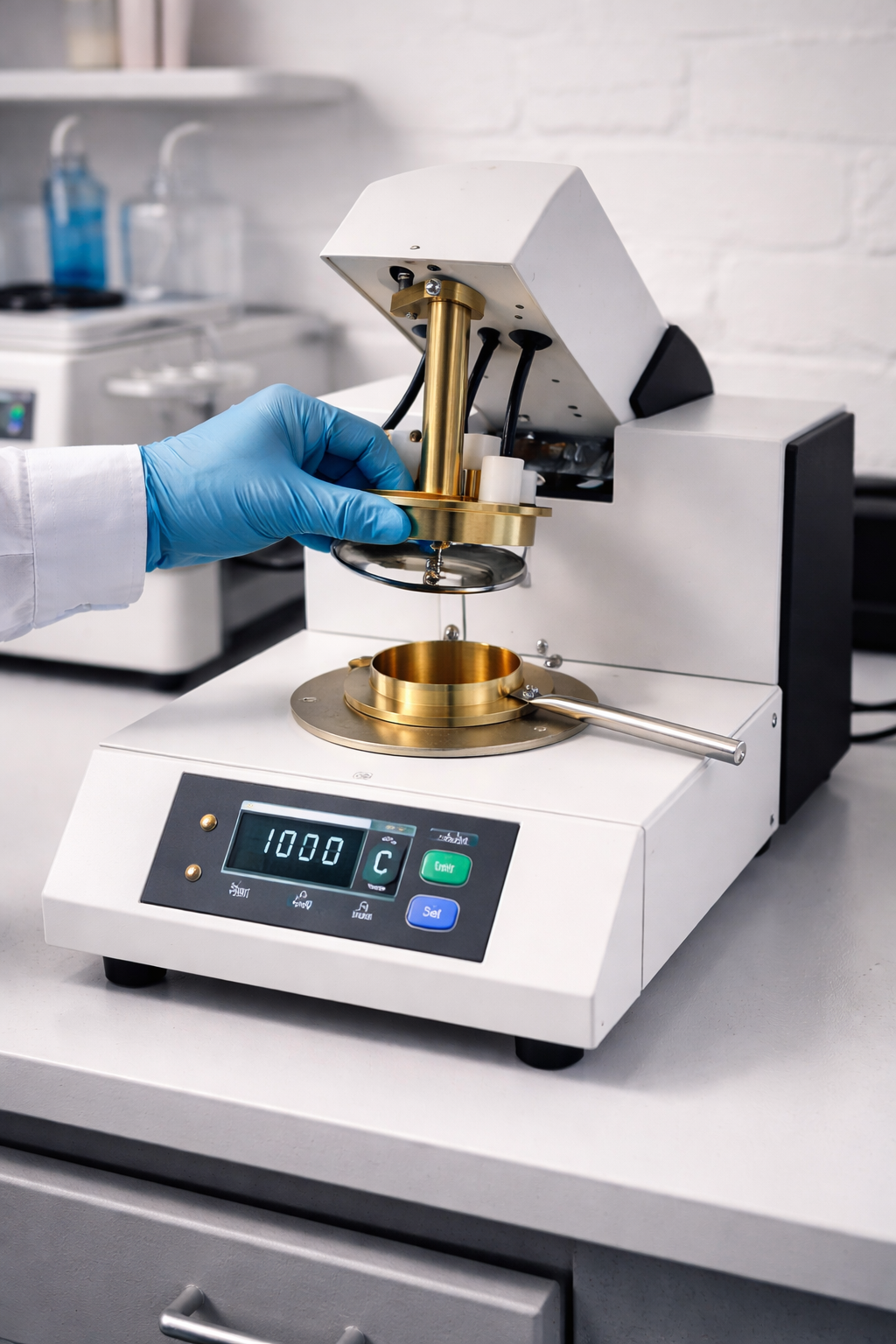
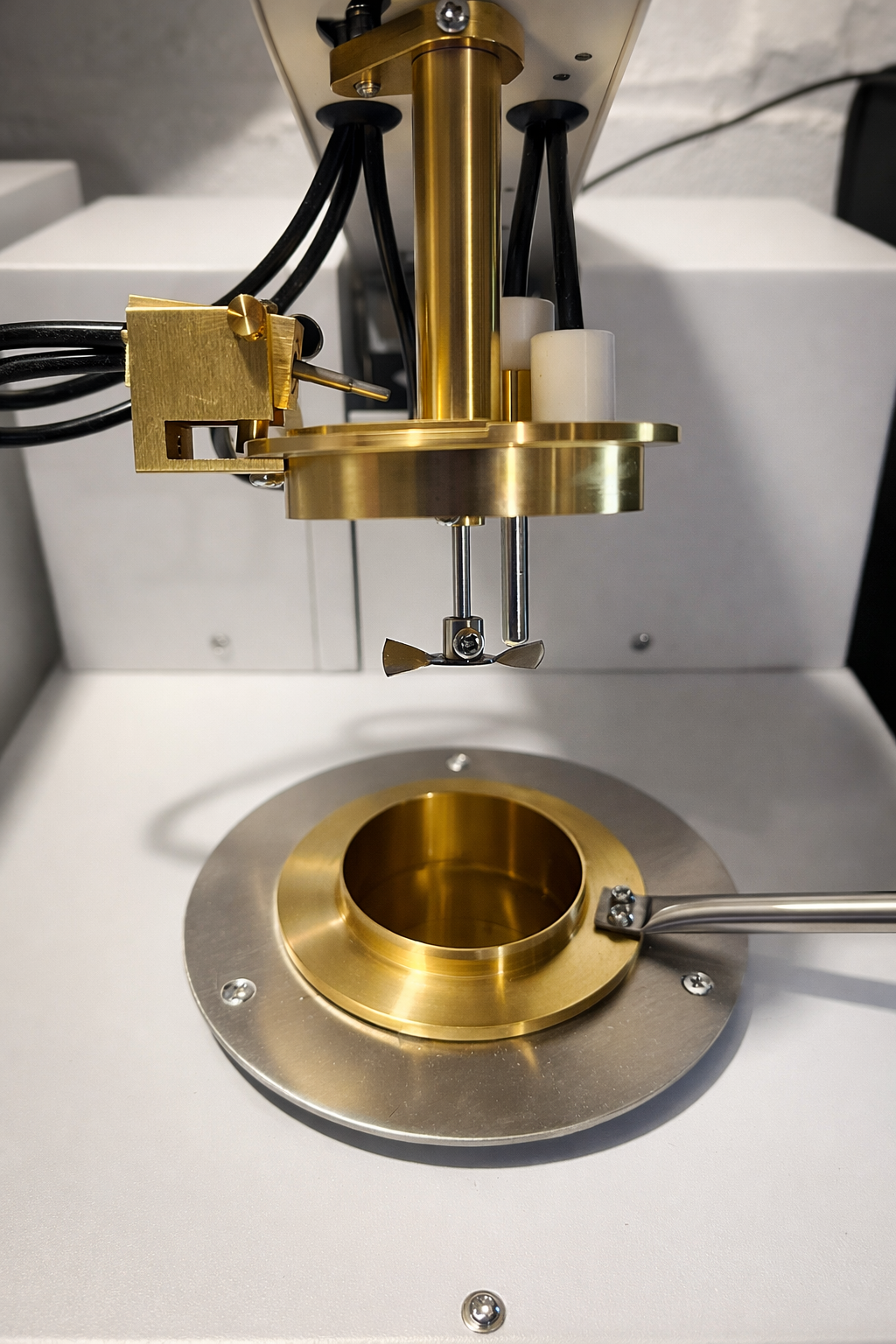
Pentyl Labs performs ASTM D93 flash point testing using the Pensky-Martens closed cup method to determine the lowest temperature at which a liquid produces ignitable vapors under controlled conditions. Because ASTM D93 confines vapors during heating, it provides conservative and regulatory-preferred flash point values for cosmetics, fragrances, and consumer formulations.
As a result, manufacturers rely on ASTM D93 when preparing SDS documentation and transport classifications.
What Is ASTM D93 Flash Point Testing?
ASTM D93 is a closed cup test method that measures flash point inside a sealed chamber. During the test, the instrument gradually heats the sample while vapors accumulate above the liquid surface. At defined temperature intervals, the instrument introduces an ignition source. When a flash occurs, the system records the temperature.
Because the chamber contains vapors, ASTM D93 typically produces lower values than open cup methods. Therefore, regulators often prefer this method for finished cosmetic and consumer products.
For a comparison of methods, see:
👉 Closed Cup vs Open Cup Flash Point
Who Should Use ASTM D93?
ASTM D93 flash point testing is appropriate for:
-
Cosmetic brands
-
Fragrance manufacturers
-
Personal care product formulators
-
Cleaning product manufacturers
-
Retail compliance teams
-
SDS preparation
If your formulation contains alcohols, solvents, essential oils, or other volatile ingredients, closed cup testing usually applies.
Why Choose ASTM D93 Instead of D56 or D92?
Different flash point methods serve different purposes. Therefore, selecting the correct test matters.
-
ASTM D93 — Emulsions, cosmetics, consumer goods
-
ASTM D56 (Tag Closed Cup) — Low-viscosity volatile liquids
-
ASTM D3828 (Setaflash) — Small-volume rapid screening
-
ASTM D92 (Cleveland Open Cup) — High-temperature industrial materials
Because closed cup methods simulate sealed storage conditions, they better represent real-world handling of finished goods. In contrast, open cup methods allow vapors to disperse, which usually results in higher flash point values.
Learn more:
👉 Selecting the Right Flash Point Method
In-House ASTM D93 Testing at Pentyl Labs
Pentyl Labs performs ASTM D93 testing in-house using a calibrated Pensky-Martens closed cup apparatus. We control heating rate, ignition intervals, and sample preparation to ensure consistent results.
We provide:
-
Flash point in °C and °F
-
Procedure identification (A, B, or C when applicable)
-
Clear, formatted report
-
Rapid turnaround options
Because we conduct testing internally, we maintain direct oversight of each sample.
Sample Requirements
To ensure accurate testing:
-
Recommended sample volume: 200–250 mL per sample to allow for duplicate or confirmatory testing if needed.
-
Provide material in a sealed container
-
Avoid excessive headspace
-
Indicate if expected flash point is unknown
If necessary, we will advise on procedure selection before testing begins.
Turnaround Time
Standard turnaround is 3–5 business days. However, expedited service may be available depending on scheduling.
For availability and pricing, contact:
📧 [email protected]
Frequently Asked Questions
What if the expected flash point is unknown?
We can perform a preliminary assessment and adjust the procedure accordingly.
Can emulsions be tested using ASTM D93?
Yes. ASTM D93 works well for emulsified cosmetic and personal care formulations.
What is the difference between Procedure A, B, and C?
Procedure selection depends on viscosity and material type. We determine the appropriate procedure before testing.
Does water affect flash point results?
Yes. Water content can influence vapor formation, particularly in emulsified systems.
Is ASTM D93 required for cosmetics?
Closed cup testing is commonly required for products containing flammable components to support hazard classification and transport compliance.
Request ASTM D93 Flash Point Testing
Pentyl Labs supports cosmetic and consumer product manufacturers with reliable closed cup flash point testing. Therefore, if you need regulatory-ready documentation or transport classification support, we can assist.
Request a quote today:
📧 [email protected]

