

Shop
Description
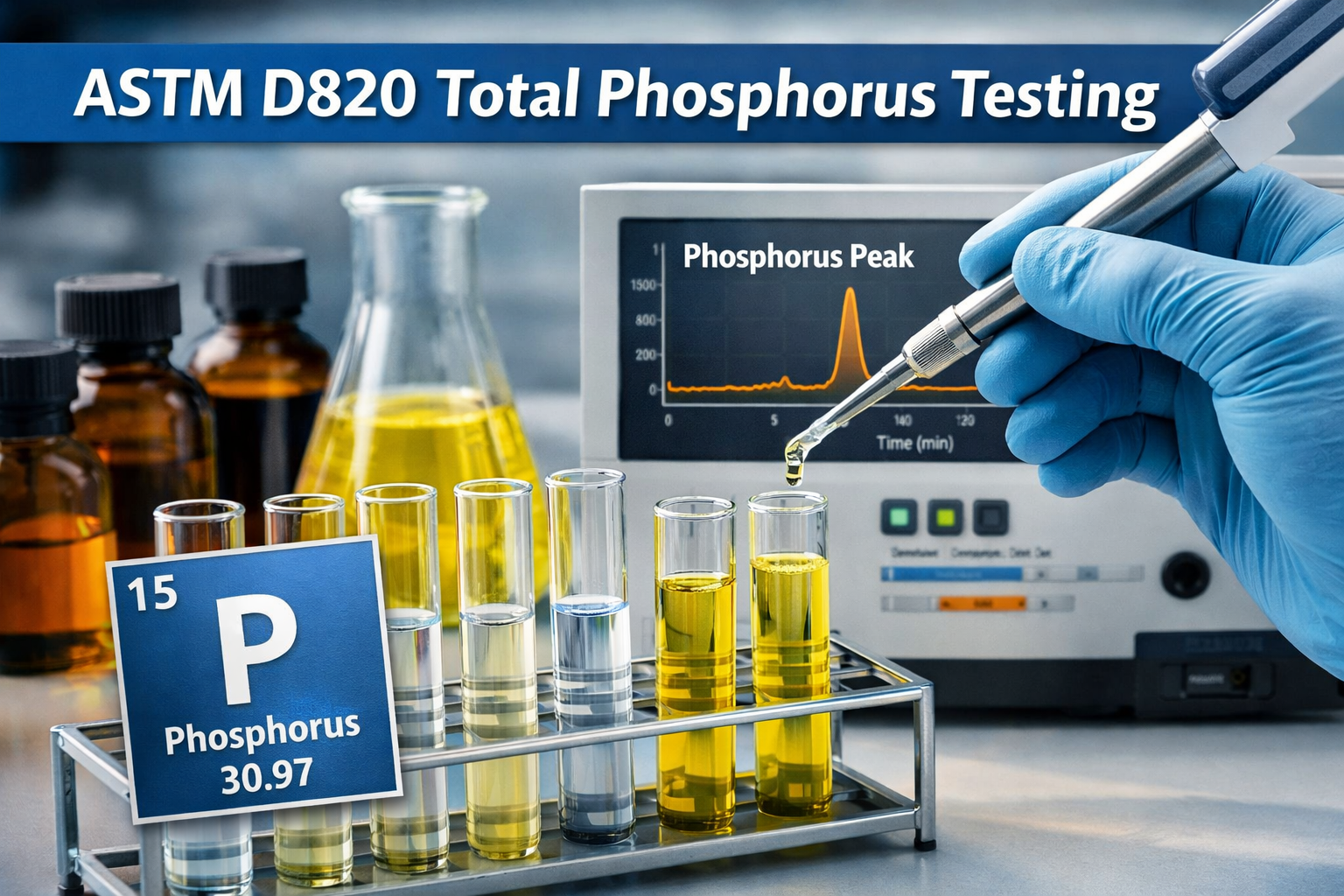
ASTM D820 – Total Phosphorus
Overview of the Analysis
ASTM D820 – Total Phosphorus testing measures the total amount of phosphorus present in fuels, oils, lubricants, cleaning formulations, and related materials. Manufacturers use this analysis to support quality control, regulatory compliance, and formulation monitoring across a wide range of applications.
Phosphorus appears in many products through additives, performance enhancers, or functional ingredients. Because elevated phosphorus levels can raise regulatory or environmental concerns, accurate measurement plays an important role in product evaluation.
Method Summary
ASTM D820 defines a standardized procedure to convert phosphorus in a sample into a measurable form. The laboratory then quantifies the phosphorus using appropriate analytical techniques. This approach provides reliable and reproducible results across applicable sample types.
Laboratories apply the method to raw materials, in-process samples, and finished products. As a result, manufacturers can track phosphorus content throughout development and production. The data supports specification limits and internal quality programs.
Applications in Cleaning and Detergent Formulations
In cleaning and detergent formulations, phosphorus may be present through phosphates or other functional ingredients used for water softening, soil removal, or performance stability. Because some regions restrict phosphorus discharge due to environmental impact, testing helps manufacturers understand formulation content early.
Total phosphorus analysis supports detergent development, reformulation projects, and compliance reviews related to wastewater or environmental requirements. By measuring phosphorus content, manufacturers can adjust formulations before products reach the market.
Regulatory and Quality Use Cases
Manufacturers often request total phosphorus analysis during supplier qualification, routine quality assurance, or formulation changes. The results help confirm batch-to-batch consistency and identify unexpected variation.
Phosphorus testing also supports environmental stewardship efforts. Excess phosphorus can contribute to nutrient loading in surface waters. Analytical data helps companies document compliance and prepare for audits or regulatory inquiries.
This analysis is commonly included within broader Elemental Analysis Services and Chemical Analysis Services programs. ASTM International publishes the official ASTM D820 method and defines quality and reporting expectations.
Why This Testing Matters
Overall, total phosphorus testing provides clear, defensible data that supports product quality and responsible formulation decisions. For fuels, oils, and cleaning products alike, the method helps manufacturers manage risk, meet requirements, and maintain confidence in product performance.

